Designing for AR/VR - Assignment 3 - Digital Twin
Stakeholders
Toolkit
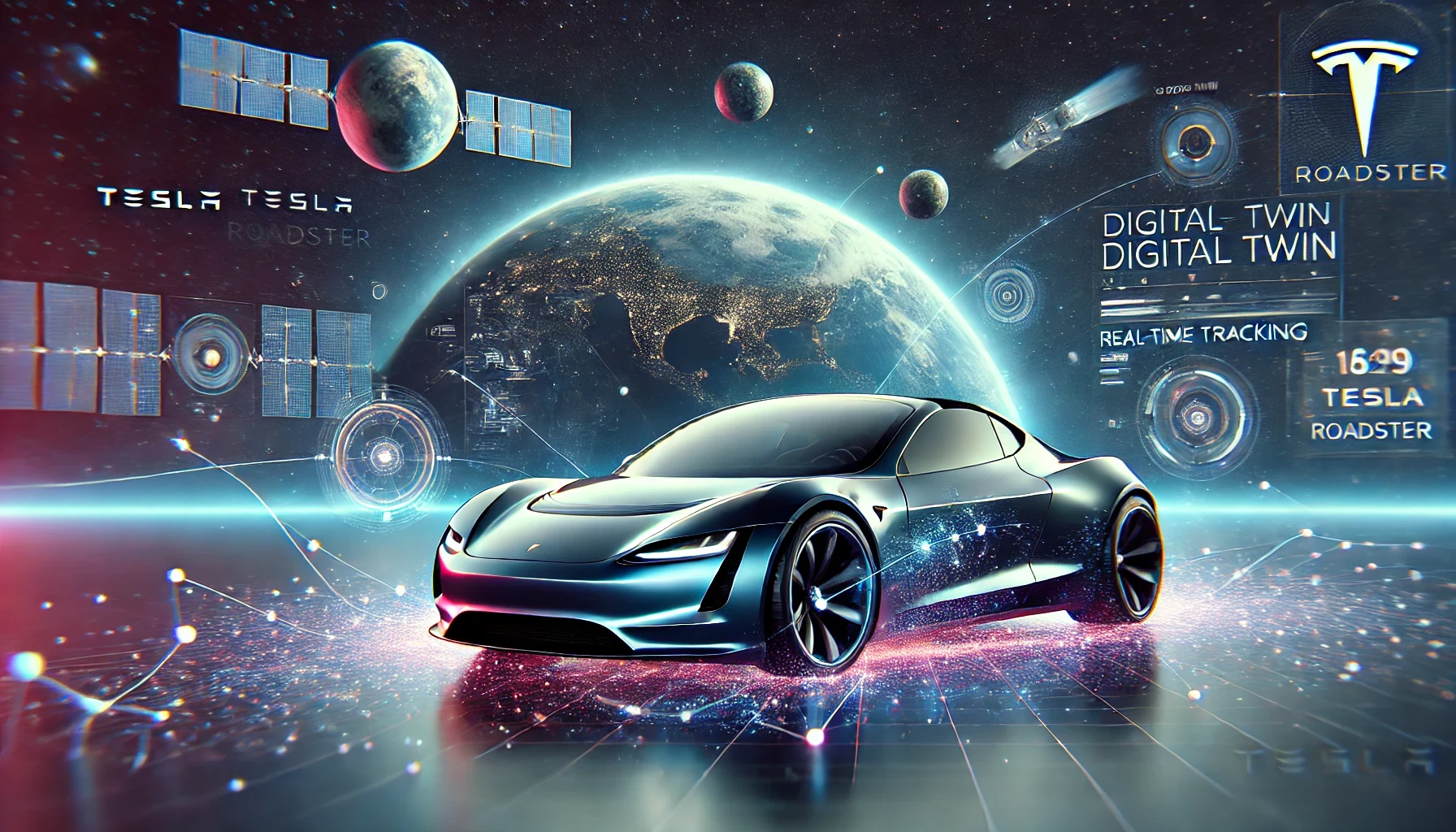
In the rapidly evolving field of augmented reality (AR), virtual reality (VR), and mixed reality (MR), mastering the creation of immersive and interactive experiences is crucial. Through the ELVTR Designing for AR VR course, I delved into the principles and practices of these cutting-edge technologies, gaining hands-on experience with tools and techniques essential for modern digital design. This case study explores my project to create a digital twin of the Tesla Roadster launched into space by SpaceX. It covers the integration of real-time data, the development of an interactive 3D model, and the challenges faced in blending live data with immersive visualization to offer a dynamic educational experience.
Introduction
For this project, I set out to create a Digital Twin that bridges the gap between space exploration and immersive virtual reality experiences.
Imagine a digital replica of the Tesla Roadster, launched by SpaceX, navigating through our solar system in real-time. This digital twin harnesses live data to accurately reflect the car's journey through space, offering a captivating and educational visualisation of its position among the planets.
By blending cutting-edge technology with real-time data integration, this project aims to provide an interactive and dynamic representation of the Tesla Roadster's interstellar voyage.
There are websites out there that are tracking ‘Starman’ but I thought it would be novel to bring this into a VR environment!
Also, this project is a very condensed version of Assignment 1 & 2, with my process all crammed into 1 page.
The challenge
Problem
The task at hand is to create a digital twin of the Tesla Roadster launched into space by SpaceX.
This digital twin should accurately plot the car's real-time position in the solar system, providing a visual representation of its journey through space.
The main challenge lies in sourcing and integrating real-time data into a 3D model, ensuring that the digital twin remains an accurate and dynamic representation of the Roadster's current location.
This involves overcoming technical hurdles such as fetching live data from APIs and updating the 3D model in real-time within a virtual environment.
Challenge
Developing a digital twin that tracks and visualises the Tesla Roadster’s position in real-time presents several challenges.
First, obtaining a high-quality, accurate 3D model of the Tesla Roadster and importing it into a suitable platform like Unity or Unreal Engine requires careful attention to detail.
Next, integrating real-time data involves writing scripts that can fetch and parse data from APIs such as SpaceX’s public data feed.
Finally, the digital twin must continuously update the car's position within a 3D model of the solar system, requiring synchronisation between live data and the virtual environment to ensure accuracy and realism.
Solution
To address these challenges, I needed to adopt a structured approach.
A high-quality 3D model of the Tesla Roadster needs to be sourced and imported into Unity. Using the SpaceX API, I will need to develop a script to fetch real-time data regarding the Roadster’s position in the solar system.
This data will need to be parsed and used to update the 3D model's coordinates within Unity. Additionally, a 3D model of the solar system needs to be sourced to provide context for the Roadster's location.
I’m also pondering on using the framework of the ISS scene we viewed in the lesson... it may fit the general look and feel that I am after.
This integration of live data with a virtual environment ensures that the digital twin accurately reflects the Tesla Roadster’s journey through space in real-time, providing an engaging and educational visualisation.

Features
This project incorporates several key features designed to enhance the user experience and educational value.
Real-time data integration ensures that the Tesla Roadster's position is continuously updated within the 3D solar system model, providing an accurate and dynamic representation.
The high-quality 3D model of the Tesla Roadster offers detailed visual appeal, while the interactive elements allow users to explore the Roadster’s trajectory through space. Informational panels enrich the experience by providing scientific insights and contextual data.
Inspired by Alex Johnson's focus on blending technology and education, these features collectively create a compelling and informative digital twin, demonstrating the potential of immersive learning tools.

Persona
To ensure the success of this digital twin project, I created the persona of Alex Johnson, a dedicated VR developer and space enthusiast.
Alex, a 28-year-old with a background in computer science, brings three years of Unity experience and a passion for space exploration to the table.
It embodies the ideal developer who strives to merge real-time data with immersive virtual environments. By envisioning Alex's motivations and challenges, the project was tailored to balance educational content with interactive elements, ensuring a dynamic user experience.
This persona guided the project’s development, emphasising the creation of a tool that is both engaging and informative, reflecting Alex's commitment to leveraging technology for educational purposes.

Story flow
The narrative structure of this project was meticulously designed to guide users through an engaging and educational journey.
Starting with an introduction to the Tesla Roadster's historic launch, the story flow transitions into an interactive exploration of the solar system, where users can observe the Roadster's real-time position among the stars.
This immersive experience is punctuated with informational panels that provide context and scientific insights, ensuring users not only interact with the 3D model but also learn about space exploration.
The story flow was crafted to captivate users, seamlessly blending educational content with interactive elements, all inspired by the persona of Alex Johnson, who values both technological innovation and educational enrichment.

Scene building
The scene building for this project was carefully crafted to create an immersive and visually captivating experience.
The 3D model of the Tesla Roadster was placed within a detailed representation of the solar system, complete with accurately positioned planets, stars, and celestial bodies.
Special attention was given to the scale and realism of the environment to enhance user engagement. By integrating real-time data, the scene dynamically updates the Roadster's position, adding a layer of authenticity to the experience.
Inspired by Alex Johnson's vision, the scene was designed to be both educational and interactive, allowing users to explore space in a meaningful way.
This scene building ensures that the digital twin is not just a visual spectacle but also a rich educational tool.
Solar System Model
A detailed 3D model of the solar system was sourced, with accurate representations of planets, their orbits, and relative positions.

Tesla Roadster
The Roadster was sourced but without Spaceman, so I had to find him too and add him to the car manually in Blender.

Bring them together
Once the 2 models were sourced I setup a Unity project and replicated the previous assignments settings with XR Toolkit etc.

Pulling in the data
I managed to find the SpaceX API with the Roadster data publicly available.

Manipulated the data to suit my needs
Utilising ChatGPT to guide me in the C# code I coded up a controller for Unity that would pipe the data through to a TextMeshPro object.

Background and Atmosphere
Space-themed background, viewing pod and ambient sounds are included from the ISS scene to create an immersive atmosphere... pardon the pun!

User interface
Ideally if I had time I would have added some interactive elements.
Main Dashboard
Displays the current position of the Tesla Roadster, along with key data points such as speed and distance from Earth.
Interactive Controls
Users can rotate the solar system model, zoom in and out, and select specific points of interest.
Information Panels
Pop-up panels provide additional information and educational content about the Roadster’s journey and space exploration.
Conclusion
Demo
The demo introduces the digital twin of the Tesla Roadster, highlighting its features and real-time capabilities.
Ideally, upon launching the Unity application, users receive an overview of the Roadster's space journey. My demo showcases live data integration from the SpaceX API, updating the Roadster's position within a detailed 3D model of the solar system.
Informational panels provide insights into the car's speed and distance from Earth, emphasising the educational and immersive aspects of the project.
This project illustrates the practical application of creating a digital twin for the Tesla Roadster launched into space by SpaceX.
By integrating real-time data and using 3D modelling in Unity, I achieved a dynamic representation of the Roadster’s position within the solar system.
The project navigated challenges such as data integration, performance optimisation, and ensuring user engagement, resulting in a tool that effectively visualises the car's journey through space.
This digital twin not only serves as an engaging educational resource but also showcases the potential of combining real-time data with virtual reality to enhance our understanding of space exploration.
Moving forward
If I am to progress with this project then I would look to adding:
Accurate animation of the position of the Roadster within the solar system
Better UI elements on displaying the data from the SpaceX API
Enrich the data output with more available information
Interactive elements to the Solar System, like enlarge, spin, rotate, tap on planet for information
Hope you enjoyed this case study, if you have any feedback then please get in touch!


